The Second Meeting of FuTURE Forum 5G/6G SIG Working Group in 2026 Held
Research | 2026/8/4July 30, 2026, The 5G/6G SIG Working Group of the FuTURE FORUM held a hybrid (in-person + online) working meeting in Beijing. The session focused on the progress and content of the various volumes of the "6G Frontier Technology Book Series".
The "6G Frontier Technology Book Series" is a systematic publishing initiative built upon years of research and exchanges within the FuTURE FORUM. The editorial board and author team comprise leading research institutions, industry-leading enterprises, authoritative experts, operators, equipment manufacturers, universities, and research organizations in the communications field. The book series covers topics ranging from 6G network architecture and communication capability enhancement to new 6G capabilities and explorations beyond traditional boundaries, systematically presenting the multidimensional paths of 6G development. The first batch of 18 volumes is scheduled to be published sequentially by Posts & Telecom Press in early 2027.
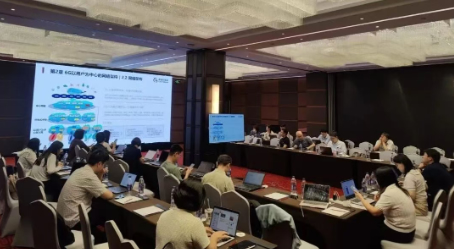
At the meeting, Dr. Chih-Lin I, Working Group Chair, Chief Scientist of China Mobile Research Institute, and Editorial Board Director of the "6G Frontier Technology Book Series", along with nearly 20 author representatives of the series, had thorough discussions on the current progress of each volume, content alignment, how different volumes should present the same technologies from their respective perspectives, and issues requiring attention.
Wang Sen from China Mobile introduced the contents of "The Diversified and Integrated 6G Network". He noted that this book systematically reviews 6G drivers, typical scenarios, key performance indicators (KPIs), network architecture, high-layer and physical-layer key technologies, emerging terminal form factors, as well as global standardization and open-source industrial ecosystems. It aims to provide systematic theoretical and technical references for China's 6G original innovation and future industrial development.
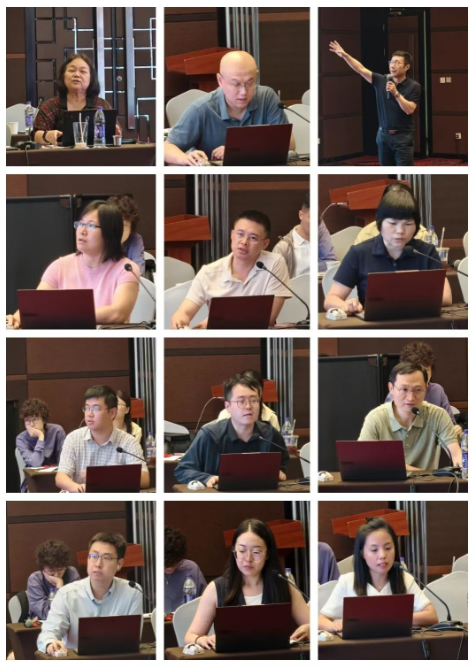
Yuan Yifei from China Mobile presented the progress of "6G Novel Multiple Access Technologies", covering an overview of novel multiple access technologies, application scenarios and performance indicator requirements, multiple access theory, key technologies for massive multiple access, and key technologies for mobile broadband multiple access, among others. The book features new breakthroughs in theoretical analysis and serves as a valuable guide.
Cheng Zhimi from CICT Mobile introduced that "User-Centric 6G Network Architecture and Key Technologies" focuses on user-centric network architecture, distributed intelligent governance networks, network artificial intelligence, data services, computing power network technologies, and access network technologies. It highlights the core concept of user-centric 6G networks evolving from "functional aggregation" to "personalized service environments."
Kang Shaoli from CICT Mobile introduced "Satellite-Terrestrial Integration, Global Coverage: 6G Satellite Internet System Design and Key Technologies". The book covers 6G satellite internet application scenarios and technical challenges, satellite internet network architecture and networking, satellite-terrestrial integrated wireless air interface technologies, inter-satellite and feeder link transmission technologies, satellite-terrestrial integrated network technologies, communication-navigation integration technologies, and communication-sensing-computing-intelligence integration for satellite-terrestrial scenarios.
Li Qianrui from CICT Mobile introduced "6G Ultra-Dimensional Antenna Key Technologies", which includes chapters on fundamental ultra-dimensional antenna technologies, ultra-massive MIMO channel modeling, centralized ultra-massive MIMO technologies, distributed ultra-massive MIMO technologies, intelligent ultra-massive MIMO technologies, low-power ultra-massive MIMO technologies, system design, and implementation solutions and verification.
Zhou Mingyu, lead author of "6G Cross-Border Innovation Incubation: Theory and Practice of Achievement Commercialization", noted that this book focuses on innovation incubation and innovation opportunities across various 6G directions. Key contents include the global 6G research landscape and driving forces, breakthroughs in key 6G wireless technologies, and system-level architectures and ecological platforms for 6G cross-border integration.
Ma Yiyan from Beijing Jiaotong University provided an update on the progress of "6G Waveform Design Key Technologies". The book extracts four key problem categories from six major scenarios: high-speed mobility, integrated sensing and communication (ISAC), intrinsic intelligence, and wide coverage with low power consumption. The content is organized around waveform performance under channel conditions, highlighting the core question: "How should waveforms be designed, received, evaluated, and unified under scenarios of high-speed mobility, ISAC, intrinsic intelligence, and wide coverage with low power consumption?"
Xie Feng from ZTE shared the creative intent behind "A New Paradigm for 6G Generalized Network Design: Systemic Reconfiguration and End-to-End Empirical Validation". He noted that currently there is no book on 6G design that links strategy and technology. This book, centered on the theme of a new paradigm for 6G generalized network design, constructs for the first time a three-core system of meta-requirements, game theory, and positioning. It aims to present not only interim results but also an inspiring opening chapter.
Su Liyan from Xiaomi introduced "Integrated Sensing and Communication: End-to-End System Design and Key Technologies". In contrast to traditional ISAC research focusing primarily on waveform design, signal processing, and algorithmic optimization, this book places greater emphasis on application scenario requirements, establishing an end-to-end system solution spanning demand analysis, physical layer design, and coordination between the access network and core network.
Chen Yiqi from China Telecom presented the progress of "6G Reconfigurable Intelligent Surface Technologies: Hardware Design, Field Trials, and Standardization". The book follows three main threads: at the hardware design level, it traces the engineering implementation path from unit to full board; at the field trial level, it validates technical feasibility across different frequency bands, multiple scenarios, and various networking modes; at the standardization level, it systematically reviews global standardization progress and clarifies potential evolutionary directions and key engineering constraints.
Zhu Yanze from Shanghai Jiao Tong University introduced that "Reconfigurable Intelligent Surface Communications: Principles, Key Technologies, and Applications" systematically covers the technical background of RIS, hardware design frameworks, channel estimation and beamforming, networking and deployment, field testing and standardization, and looks ahead to frontier directions such as millimeter-wave and terahertz metasurfaces, near-field communications, ISAC, and the integration of RIS with artificial intelligence.
Yuan Yannan from vivo introduced "6G Data Framework". Unlike the "siloed" data collection and non-interoperable data usage in the 5G era, the 6G data framework aims to treat data as a key element of 6G systems, providing full lifecycle management and improving efficiency from data generation to consumption. The book includes use cases and requirements, key technical issues, 6G data framework and solutions, 3GPP 6G data framework research progress, and data-plane prototype demonstrations.
Du Zhimin from Qualcomm introduced the progress of "6G and Terminal Security". The book discusses terminal security systems in the 6G era, focusing on the evolution of mobile communication security technologies from 1G to 5G, as well as security challenges and solutions in the 6G era amid intelligentization, complex network environments, and new service requirements. Key topics include trustable security frameworks, zero-trust architectures, AI security, and multi-device collaborative security.
Chen Yijian from ZTE introduced "The Spatial Dimension Revolution: The Cornerstone of 6G Physical Layer". The book centers on the concept of the spatial dimension, attempting to systematically discuss, starting from fundamental electromagnetic physics, the role and development direction of spatial dimension resources in 6G communication systems. Compared to traditional communications research, this book pays greater attention to the physical mechanisms behind the spatial dimension and explores its potential value in capacity enhancement, near-field communications, multi-polarization transmission, electromagnetic precoding, and spatial sampling.
Xu Fanfei from the Purple Mountain Laboratories introduced the content and progress of "DOICT-Integrated 6G Networks". The book addresses the development needs of future 6G networks oriented toward multi-dimensional service scenario integration, collating and summarizing domestic and international research progress to form a theoretical framework and technical system for future 6G network evolution. Unlike traditional communications books, it emphasizes the overall capability evolution of future networks rather than the optimization of individual communication technologies.
Gao Lu from Qualcomm introduced "Toward an Intelligent Ecosystem: 6G Terminals". He noted that this book does not focus on 6G air interface, protocol, or physical-layer key technologies. Instead, it analyzes the development needs of future mobile communication systems from a terminal perspective, exploring core questions such as: "Why are 6G terminals needed when 5G/5G-Advanced cannot meet future intelligent and diversified terminal demands? What capabilities should future terminals possess, and how should they integrate into the intelligent ecosystem?"
Dong Jing from China Mobile introduced "Integrated Sensing and Communication: Theoretical Modeling, Key Technologies, and System Implementation". This book systematically presents the overall framework, development status, fundamental theories, key technologies, and system design of ISAC, and provides test validation results for multiple typical ISAC scenarios. It balances theoretical depth with engineering practicality, offering a authoritative reference for both cutting-edge ISAC research and engineering practice.
Dr. Chih-Lin I also engaged in further discussions with the participants regarding the core issues, content emphasis of each volume, and the next-phase objectives of the working group.