The New Mid-Band Seminar & Inaugural Meeting of the New Mid-Band Working Group was successfully held
Research | 2026/4/30April 21–23, 2026 – The 2026 Global 6G Conference, co-host by the FuTURE FORUM and the Purple Mountain Laboratories, was held in Nanjing. Under the theme "Better Together, Better Future" the conference focused on 6G frontier technology breakthroughs, industrial ecosystem development, and application scenario exploration, driving 6G from vision to reality and from the laboratory to the industrial ecosystem.
The "New Mid-Band Seminar & Inaugural Meeting of the New Mid-Band Working Group" was successfully held on the morning of April 23. The seminar was co-organized by the FuTURE FORUM and Beijing University of Posts and Telecommunications(BUPT), with support from the BUPT-China Mobile Joint Research Institute, Southeast University, and Nanjing University of Posts and Telecommunications.
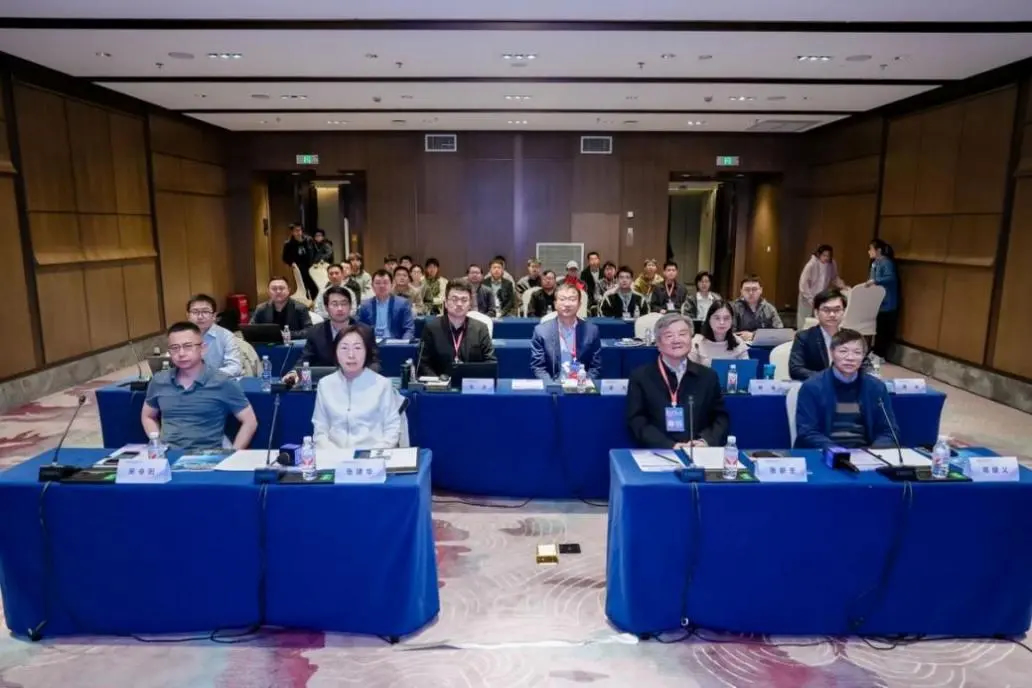
New Mid-Band Seminar & Inaugural Meeting of the New Mid-Band Working Group
The seminar featured a total of 8 presentations, with participating experts and scholars engaging in extensive and in-depth exchanges on topics including spectrum availability and efficient utilization of the new mid-band, channel modeling and standardization, network architecture and hardware technologies, system design, and prototype verification.
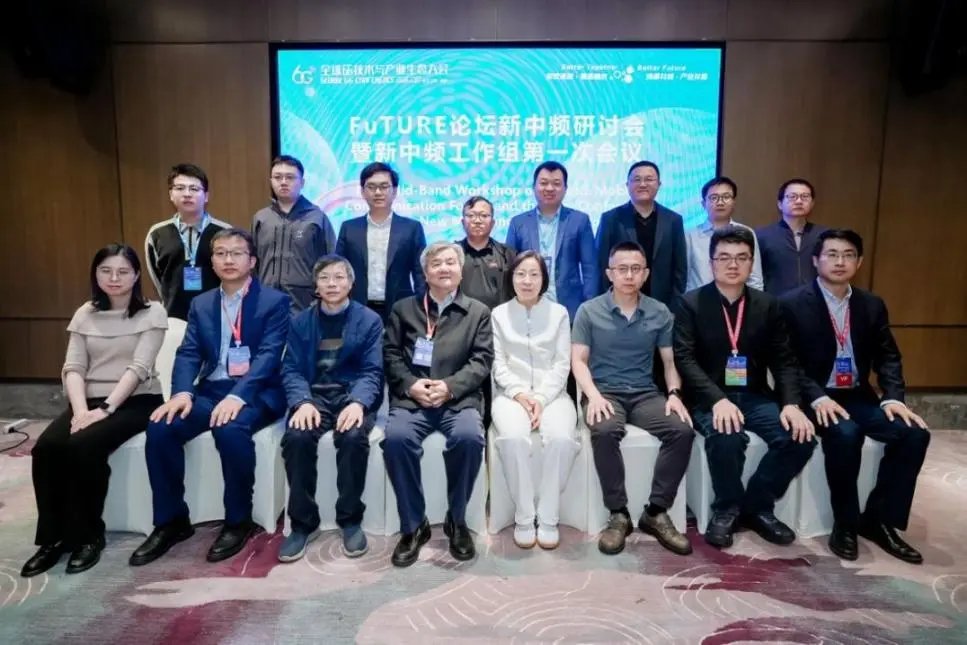
Group photo of seminar guests
First, Prof.Zhang Jianhua from BUPT, Chair of the New Mid-Band Working Group, extended a warm welcome to all guests attending the seminar. He reviewed the overall development trajectory of 6G technology evolution and standardization layout, noting that global 6G spectrum planning is accelerating its focus on the new mid-band (FR3, 6–24 GHz), which offers outstanding unique advantages in both coverage capability and system capacity, and is critically important to the innovation and development of future mobile communication systems. The New Mid-Band Working Group will focus on the rational selection and efficient utilization of new mid-band spectrum resources, carrying out research on fundamental theories, novel technology development, and key hardware design, to support 6G new mid-band technology R&D and industrial deployment.
Prof. Zhang Ping, Honorary Chair of the New Mid-Band Working Group and Academician of the Chinese Academy of Engineering (CAE) from BUPT, reviewed the foundational role of spectrum in the iterative development of mobile communications. Spectrum is the fundamental resource for the development of the wireless mobile communications industry, and differentiated strategic spectrum layouts will directly influence the direction of industry development. Looking back at the evolution from 3G and 4G to 5G, spectrum resources have always played a critically supportive role. At the present stage, China has established an independent frequency development approach adapted to 5G and 6G development, which has also provided strong support for the successful formation and steady advancement of the New Mid-Band Working Group. Leveraging the intellectual exchange and in-depth discussions at this seminar, all industry stakeholders will join forces to advance research on new mid-band spectrum utilization technologies, standardization development, and industrialization, continuously consolidating the foundation for large-scale application of new mid-band technologies, gathering industrial synergy, and contributing significant strength to new mid-band technological innovation and industrial development.
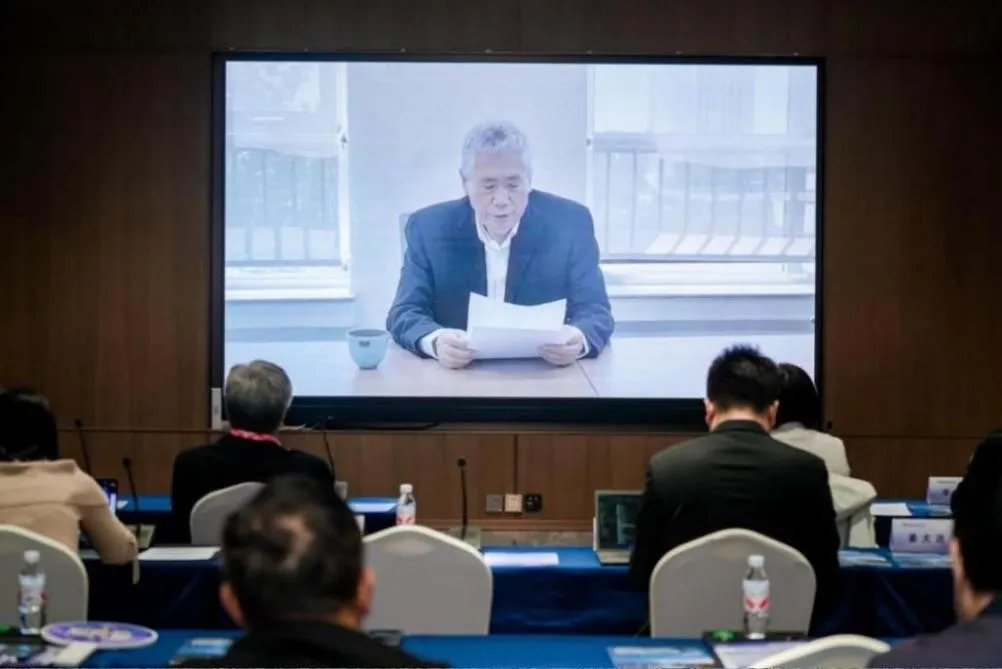
Prof.Zhang Ping, Honorary Chair of the New Mid-Band Working Group, CAE Academician, BUPT, delivering a speech
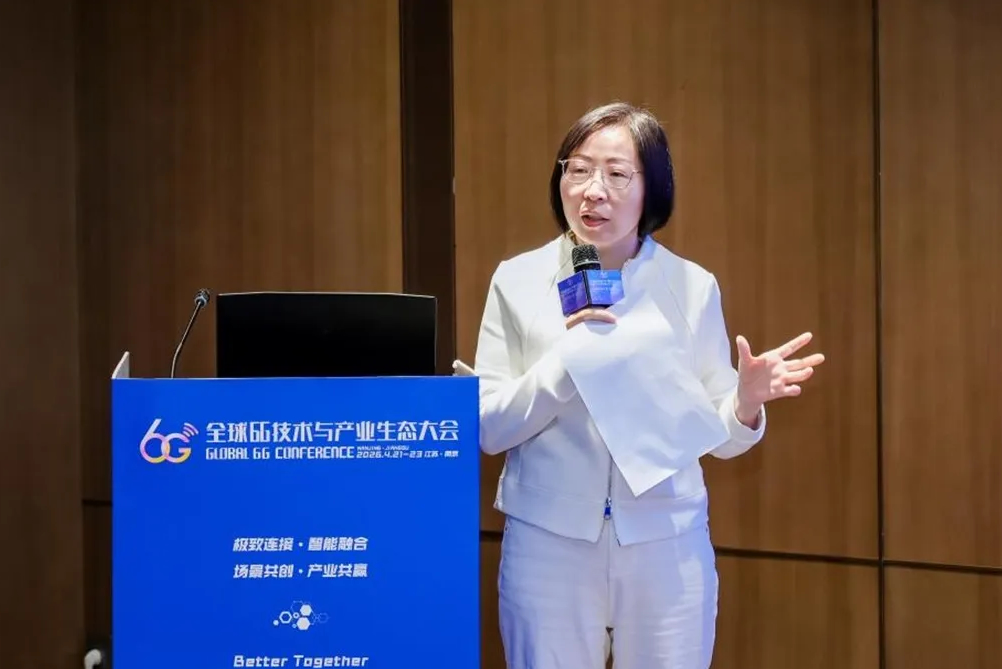
Prof. Zhang Jianhua, Chair of the New Mid-Band Working Group, BUPT, hosting the opening session
Zhang Xinsheng, a senior telecommunications expert, drew on his many years of deep experience in the wireless mobile communications field to review China's 3G, 4G, and 5G iterative development journey, emphasizing that spectrum is the foundational, strategic, and scarce lifeline of mobile communications development. At present, 6G has been incorporated into the "15th Five-Year Plan" and elevated to a major national development strategy. Global competition over 6G spectrum is intensifying, and the new mid-band, as a core resource supporting 6G evolution, is growing increasingly prominent in strategic value. At the same time, it faces practical challenges including increased propagation loss due to higher frequency bands, and significantly higher base station construction and operational costs. The industry should not blindly expand base station deployments; instead, it can leverage China's advantageous technologies such as massive MIMO and advanced antennas to address transmission shortcomings and control construction costs, responding to industry concerns about 6G investment returns. The establishment of the New Mid-Band Working Group is timely and of far-reaching significance. Going forward, the Working Group needs to consolidate industry consensus, focus on spectrum planning, key technology breakthroughs, standard-setting, testing and verification, and industrial coordination, advancing steadily with solid research outcomes to support scientific spectrum decision-making and comprehensively build a robust foundation for high-quality 6G industry development.
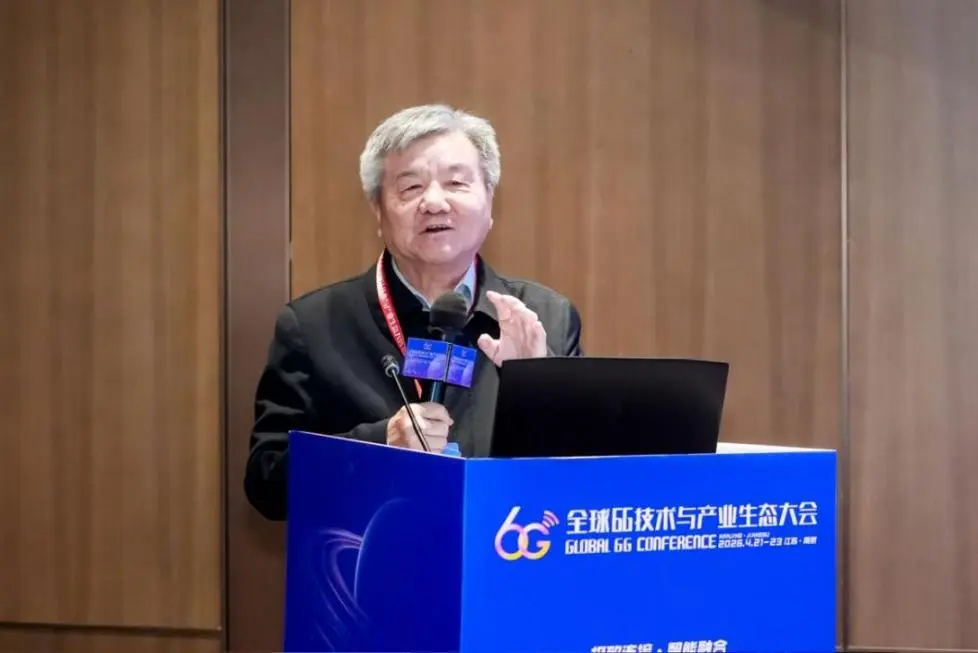
Senior telecommunications expert Zhang Xinsheng delivering a speech
Tang Pan, Associate Professor from BUPT hosted the first half of the seminar sessions.
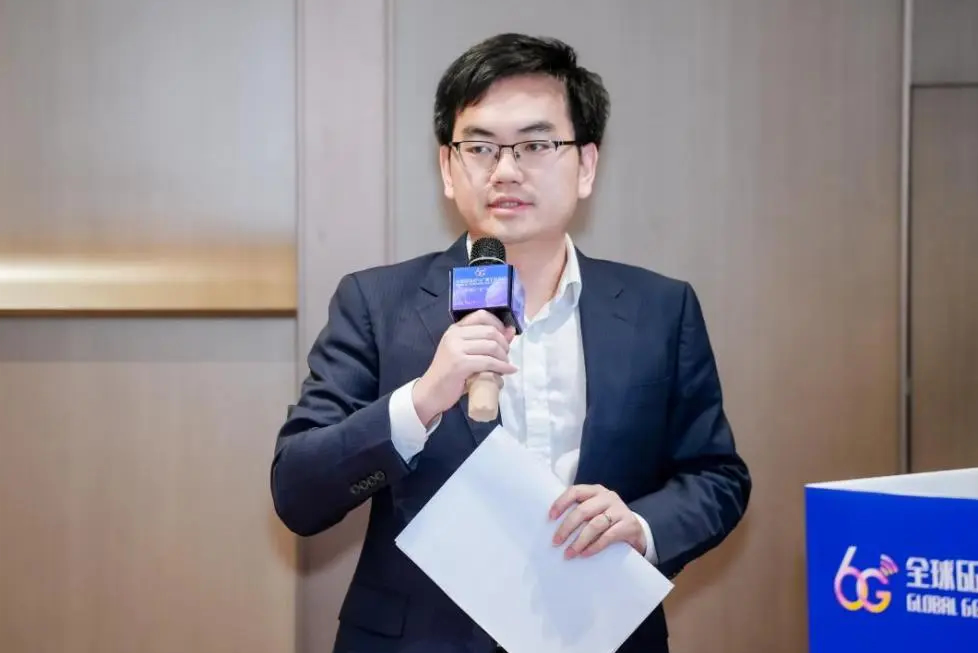
Associate Professor Tang Pan, BUPT, hosting the seminar
Prof. Zhang Jianhua from BUPT, Deputy Director of the National Key Laboratory of Network and Switching Technology, and Executive Director of the BUPT-China Mobile Joint Research Institute, delivered a presentation titled "Discovery of Four New Channel Characteristics in the New Mid-Band (6–24 GHz) and International Standardization of the E-GBSM Model – Boosting 6G New Mid-Band Technology Innovation and Industrial Application." The presentation shared insights on the propagation characteristics of the 6–24 GHz new mid-band, drawing on experience from 3.5 GHz channel research to illustrate the significant value of forward-looking technology layout for China's 5G development. The report noted that this frequency band previously suffered from a standard gap while offering outstanding bandwidth advantages. The team's years of dedicated research have resulted in multiple modeling outcomes being incorporated into 3GPP international standards, simultaneously completing band project approval and the development and calibration of self-developed simulation software. The presentation also introduced the founding purpose, development plan, and goals of the New Mid-Band Working Group, proposing that through industrial collaboration, the group will tackle challenges including transmission loss, base station construction, and equipment power consumption, and will promote new mid-band technology innovation and industrial deployment through initiatives such as publishing white papers and building international exchange platforms.
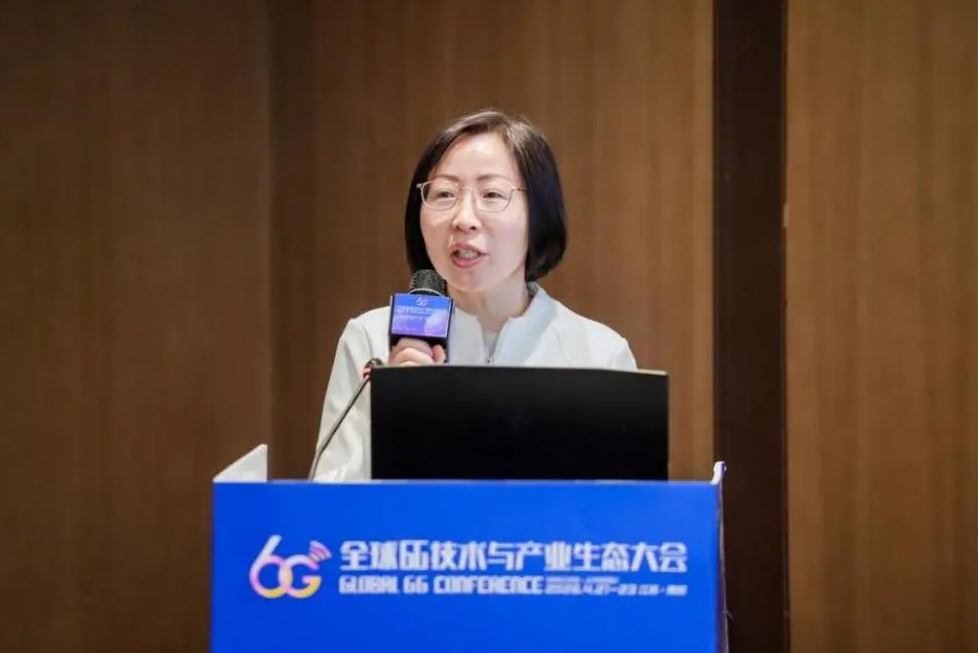
Prof. Zhang Jianhua, Chair of the New Mid-Band Working Group, BUPT
Prof. Han Yu from Southeast University, on behalf of Professor Jin Shi, Vice President of Southeast University, delivered a presentation titled "Mid-Band Ultra-Massive MIMO Wireless Transmission." The team has conducted in-depth research on key issues in mid-band ultra-massive wireless transmission. Addressing challenges such as complex channel characteristics and high algorithmic computational complexity with large arrays, the team has completed multi-scenario channel measurements and system performance analysis, overcome core technologies including low-complexity transmission and efficient channel information acquisition, and extended research into near-field user positioning and tracking. Simultaneously, the team has built a high-performance prototype verification system and continues to optimize hardware architecture. Future work will involve joint testing with emerging communication technologies, laying a solid theoretical and practical foundation for the application of 6G new mid-band wireless transmission technologies.
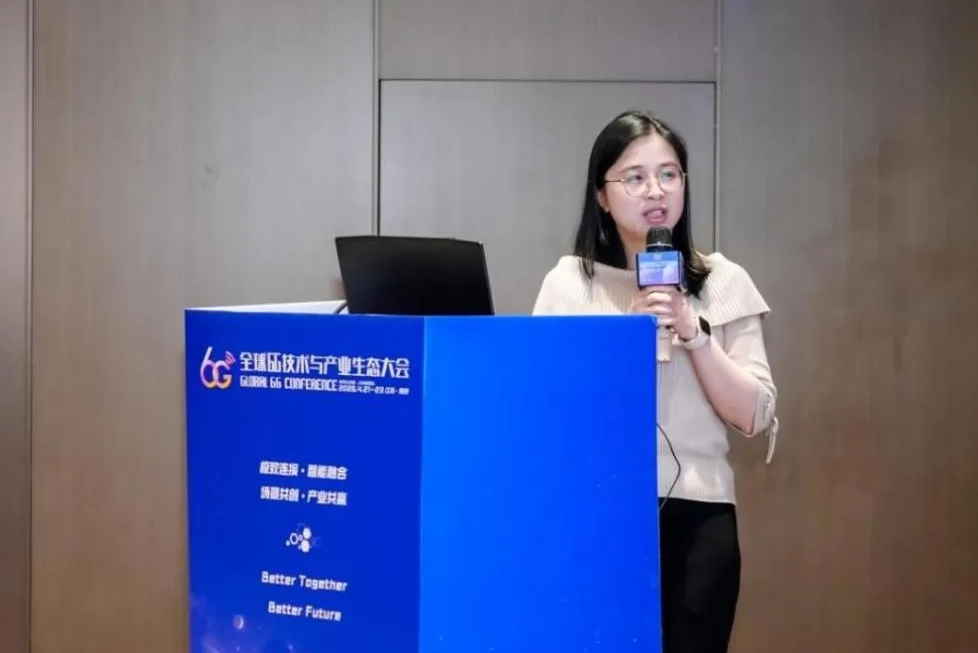
Prof. Han Yu, Southeast University
Prof. Song Lingyang, Vice Chair of the New Mid-Band Working Group, Boya Distinguished Professor at Peking University, and Director of the Institute of Information and Communication, delivered a presentation titled "Metamaterial-Assisted New Mid-Band Backscatter Communication." The research focuses on new mid-band backscatter communication and passive IoT. Addressing pain points of traditional IoT—high energy consumption, high cost, and difficult maintenance—the work leverages backscatter communication technology to exploit the advantages of passive IoT (no power supply required, low cost, and easy deployment). Focusing on mainstream applicable bands in the new mid-band, the research aims to resolve the trade-off between passive sensing accuracy and transmission distance. The team has innovatively adopted metamaterial array structures to design passive tags, using beamforming technology to extend transmission distances to the 50-meter level and toward 100 meters, while simultaneously tackling key technologies including customized tags, multi-type sensing adaptation, and analog signal demodulation. The metamaterial backscatter sensing prototype system can be applied to infrastructure health monitoring for buildings and bridges, and is adaptable to extreme environments.
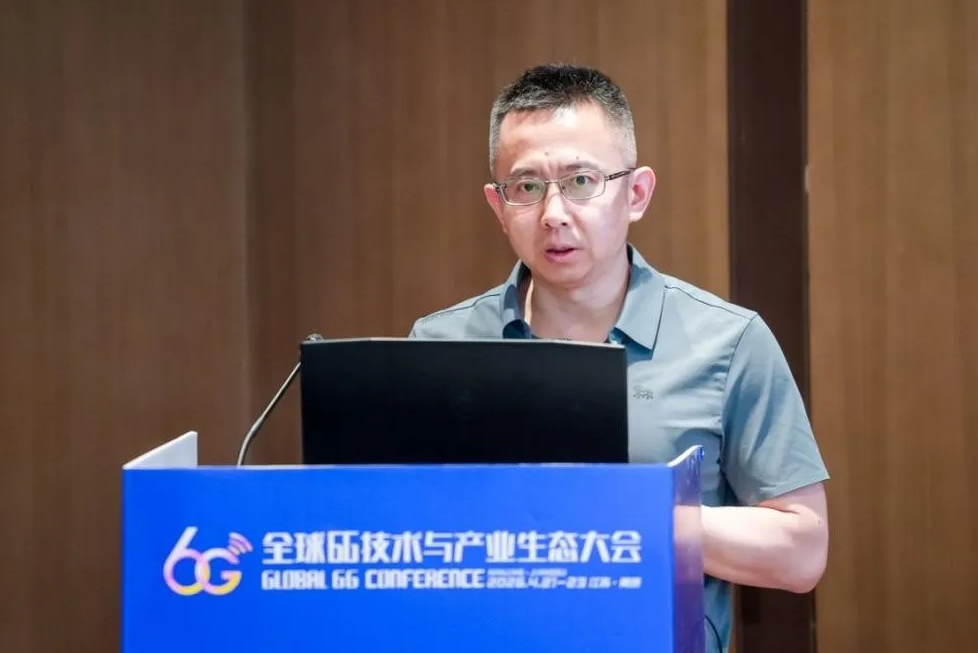
Prof. Song Lingyang, Vice Chair of the New Mid-Band Working Group, Peking University
Xia Liang, Principal Researcher at China Mobile Research Institute, delivered a presentation titled "New Mid-Band Technology Research and Verification." He pointed out that the current U6G band faces issues such as significant edge rate attenuation and prominent uplink performance shortcomings. With the proliferation of services such as humanoid robot video capture and the expansion of user scale, the uplink service load on 6G networks will further intensify. Leveraging its self-developed testing platform, China Mobile has completed verification of key technologies including U6G ultra-massive MIMO, establishing a complete R&D closed loop from simulation and algorithm research to indoor and outdoor testing, achieving single-carrier single-user peak rates exceeding 9 Gbps and 500-meter-level extended coverage. At the same time, China Mobile has built an open, co-creation 6G testbed to help the industry jointly address U6G band application challenges. Future efforts will focus on co-site coverage testing between U6G and existing bands, concentrating on core directions such as uplink enhancement, multi-band converged networking, and macro-site antenna array optimization, to continuously improve the 6G technology system and accelerate industrial deployment.
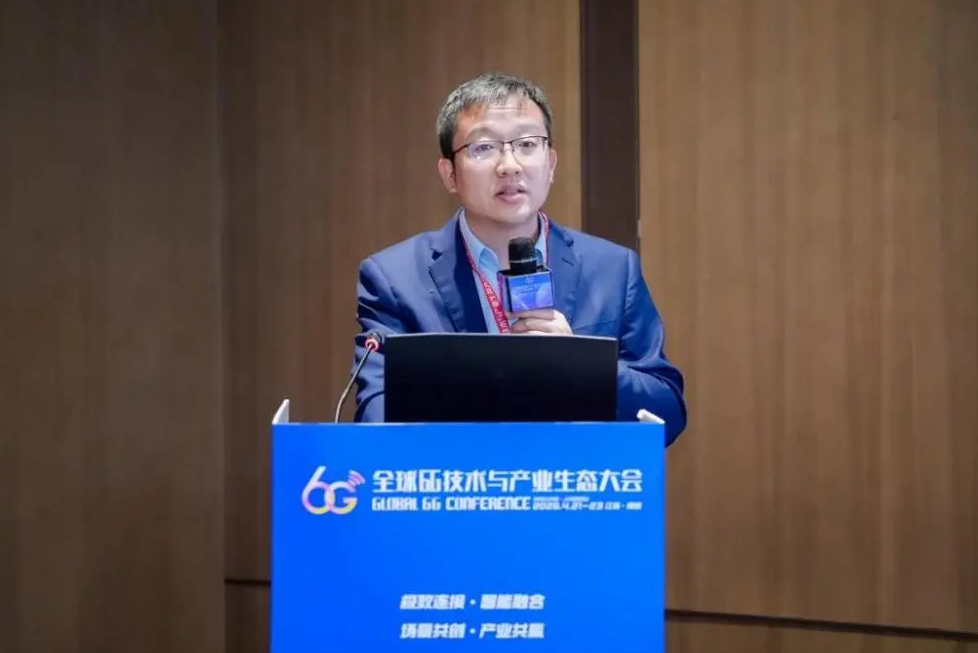
Xia Liang, Principal Researcher, China Mobile Research Institute
Prof. Han Yu from Southeast University hosted the second half of the seminar sessions.
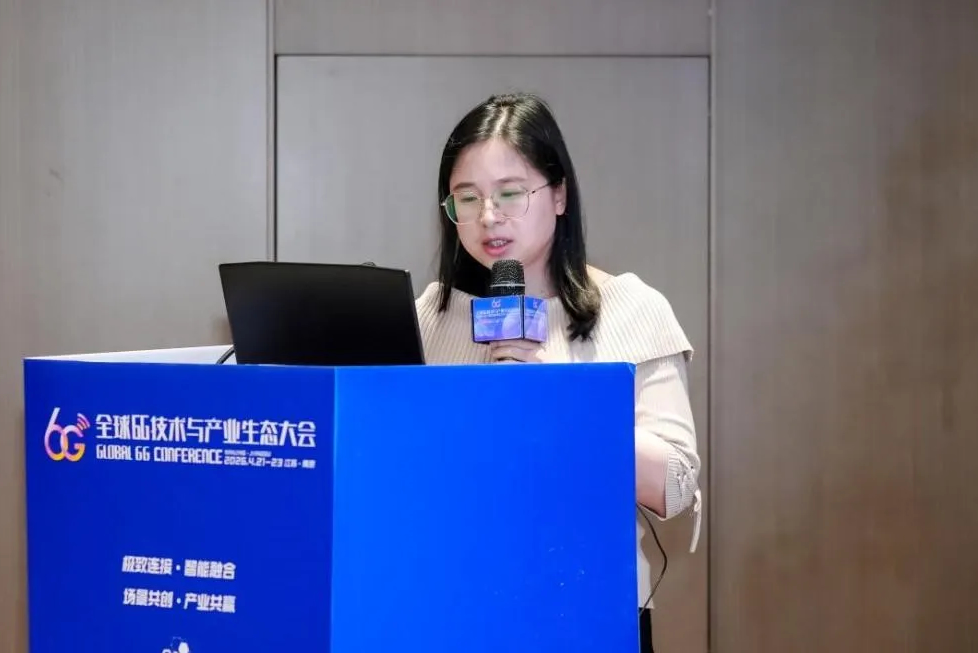
Prof. Han Yu, Southeast University
Prof. Zhou Jianyi from Southeast University delivered a presentation titled "Research Progress on 6G Mid-Band Base Station Massive Arrays and Terminal Antenna Modules." He shared the latest hardware R&D achievements in 6G mid-band base station arrays. The research team has realized the development of a thousand-element massive array system, integrating hybrid beamforming architectures, modular design, and high-precision synchronous calibration technologies, optimizing RF front-ends, integrated antennas, and digital intermediate frequency core solutions. System testing shows stable performance with accurate target tracking capability. Additionally, the team has developed multiple miniaturized antenna modules fully adapted to terminal miniaturization application requirements. The research team will continue to advance iterative upgrades toward lighter and smaller equipment, continuously improving the new mid-band hardware technology system and laying a solid hardware foundation for large-scale 6G industry development.
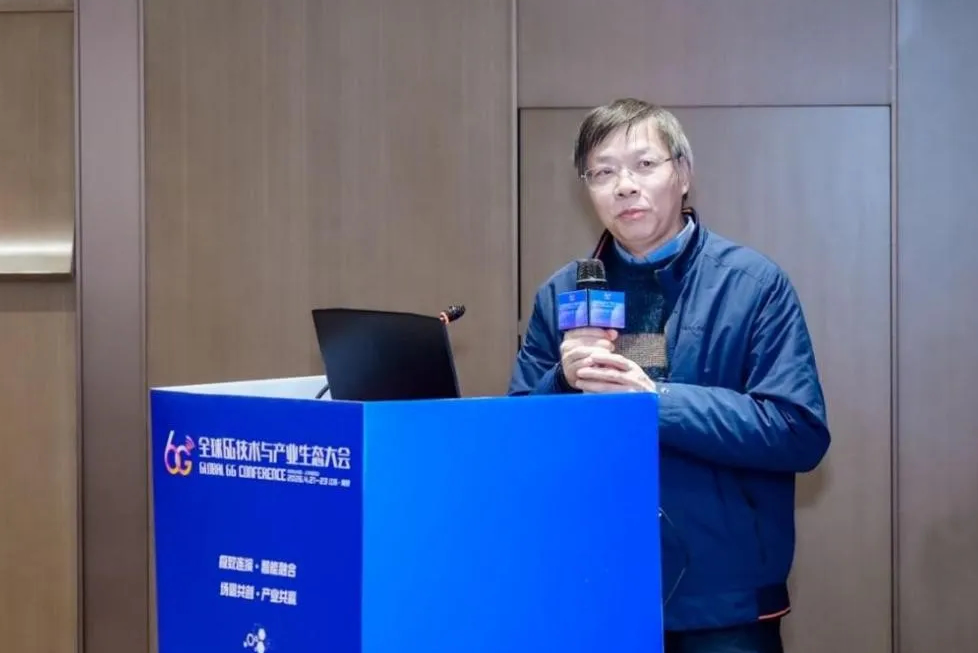
Prof. Zhou Jianyi, Southeast University
Gao Bo, Wireless Senior Expert in Technology Pre-Research at ZTE Corporation, delivered a presentation titled "New Mid-Band Pre-Research and 6G Standardization Progress." The presentation covered the development trends of the 6G new mid-band U6G, standard progress, and industrialization paths. At present, the U6G band has achieved global industry consensus, with countries accelerating spectrum planning layouts, and relevant international standards are expected to be formally established in 2027. Analyzing technology evolution trends, the presentation examined the deployment characteristics of U6G's large bandwidth and ultra-massive arrays, pointing out that uplink coverage limitations are the core challenge at the current stage. The presentation also introduced the latest achievements in 6G channel modeling standardization, focusing on key research directions including near-field communications, terminal heterogeneity, and spatial non-stationarity. The U6G band combines the dual advantages of traditional mid-band wide coverage and millimeter-wave large capacity. The industry has proposed solutions including massive antenna enhancement, terminal multi-antenna optimization, low-frequency coordinated networking, and distributed architecture upgrades to effectively address performance gaps and control network construction costs, laying a solid industrial foundation for large-scale application of 6G new mid-band technologies.
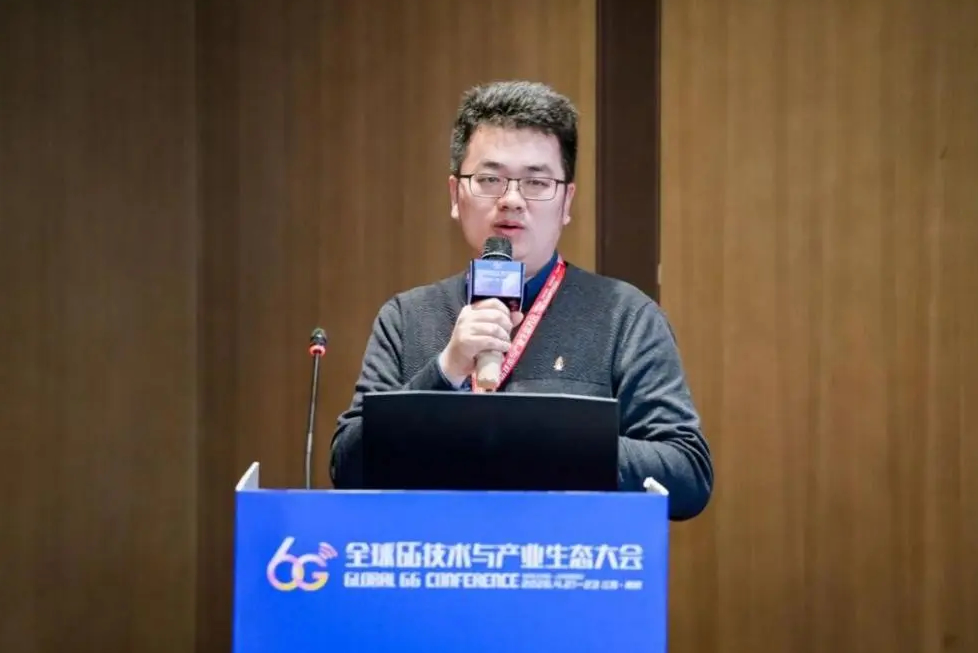
Gao Bo, Wireless Senior Expert in Technology Pre-Research, ZTE Corporation
Jiang Dajie, Pre-Research Director of the vivo Communications Research Institute, delivered a presentation titled "New Mid-Band Challenges and Technology Outlook for 6G." The presentation covered three aspects: new mid-band challenges, new mid-band technology outlook, and the third-generation 6G terminal verification platform. The report noted that the 6G new mid-band currently faces multiple technical challenges including the absence of dedicated channel models, increased transmission path loss, prominent near-field effects, and spatial non-stationarity. To address coverage and transmission shortcomings, the industry can leverage AI-enabled MIMO enhancement, massive antenna beamforming, uplink PAPR optimization, novel waveform design, and time-domain repetition transmission to resolve pain points. The presentation also showcased the company's self-developed third-generation 6G terminal verification platform, providing solid support for new mid-band technology testing and industrialization exploration.
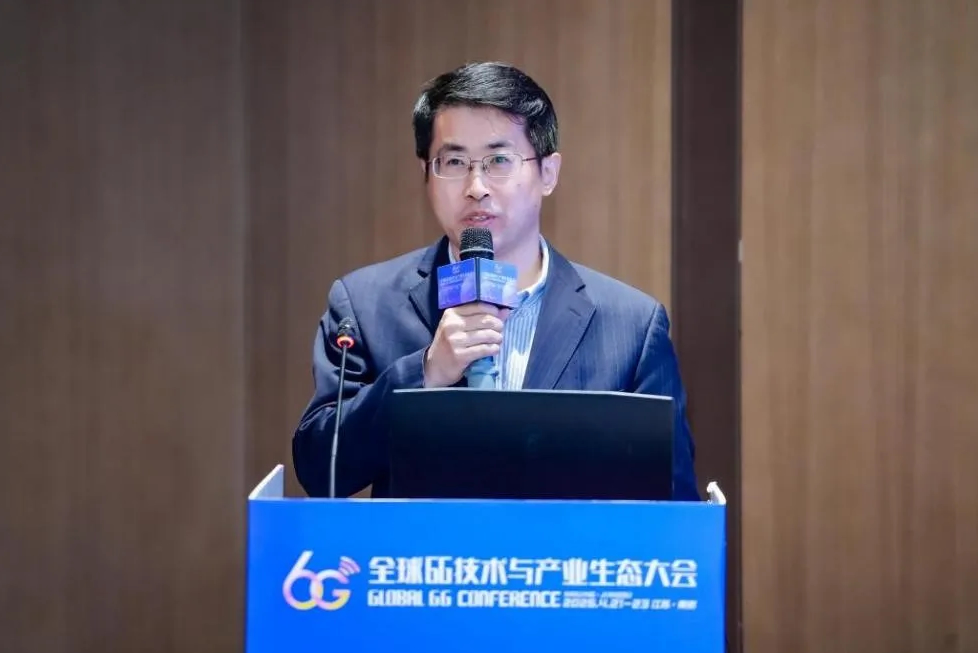
Jiang Dajie, Pre-Research Director, vivo Communications Research Institute
Professor Emil Bj?rnson from the KTH Royal Institute of Technology, IEEE Fellow, delivered a presentation titled "Gigantic MIMO: The Next-Generation Antenna Array Technology." The professor introduced the evolution of multiple access in cellular networks, upper-mid-band 6G networks, the definition of Gigantic MIMO, and beamfocusing, which align with real-world deployment scenarios, can optimize communication service quality, and effectively suppress interference. Ultra-massive MIMO will become the core antenna technology for 6G, specifically adapted to the upper-mid-band frequency range, capable of significantly enhancing system capacity through large-scale antenna configurations. At the same time, this approach can fully leverage near-field characteristics to enable base station sensing capabilities, providing a reference for 6G mid-band technology R&D.
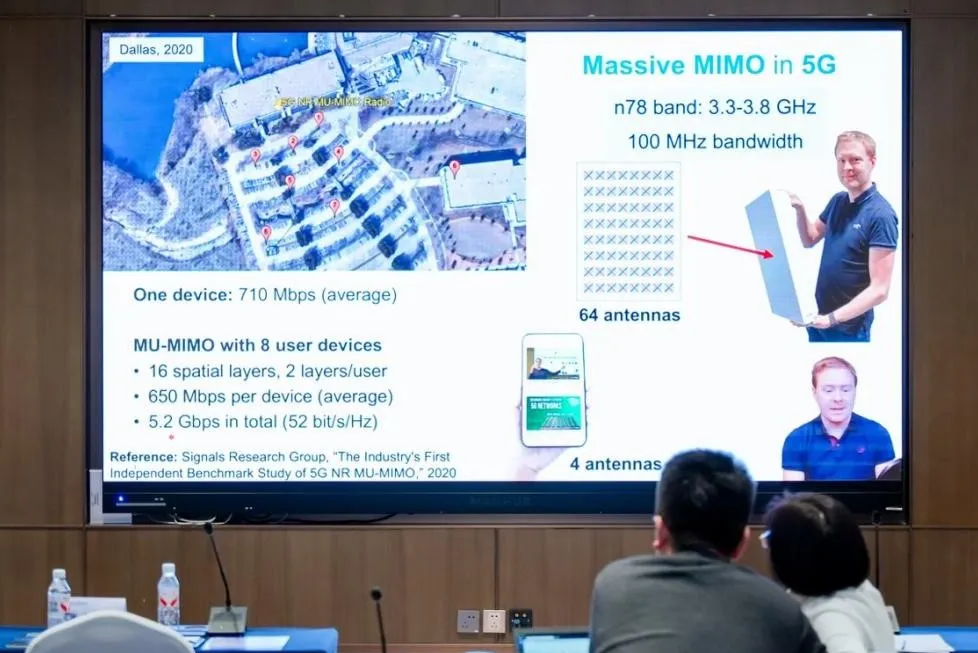
Professor Emil Bj?rnson, KTH Royal Institute of Technology, IEEE Fellow
Finally, building on the frontier presentations and in-depth discussions by the experts, Prof. Zhang Jianhua delivered a concluding summary of all the presentations, technical perspectives, and discussion outcomes of the seminar. The seminar not only showcased the latest research achievements in the new mid-band field but also injected new momentum into the innovative development of 6G new mid-band technologies. It is hoped that all sectors of industry, academia, and research will take this seminar as an opportunity to collaborate and advance together, jointly promoting 6G new mid-band technology R&D and industrial deployment.