Cell-Free Network Working Group Holds Plenary Meeting in Nanjing
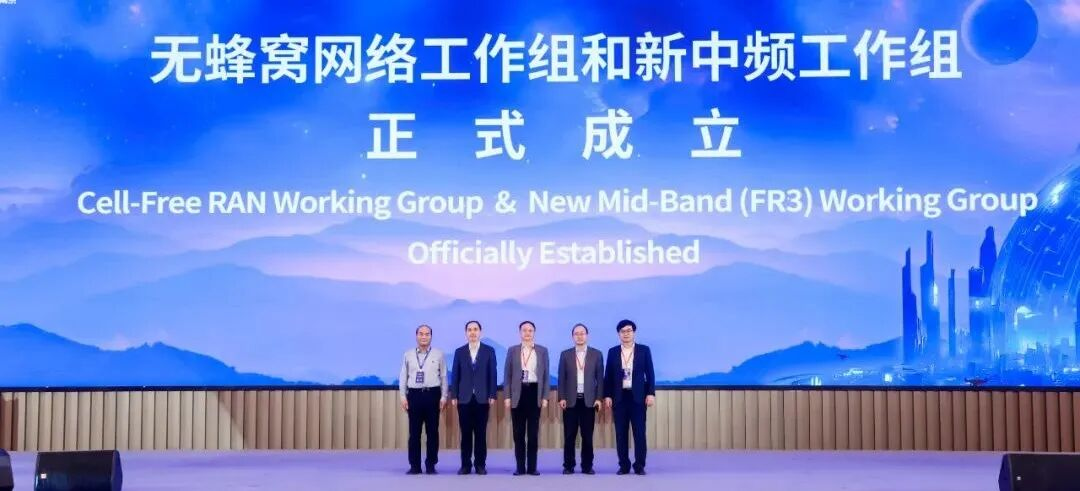
Research | 2025/8/2In April 2025, the FuTURE Forum officially established the Cell-Free Network Working Group. On August 21, the Working Group held its plenary meeting at the Shangqinhua International Cultural Exchange Center in Nanjing. The meeting brought together the Working Group's Co-Chairs—Huang Yongming, Director of the Universal Communications Research Center at Purple Mountain Laboratories, and Fu Zhiren, Vice President of China Telecom Research Institute—alongside Vice Chairs Li Fuchang, Director of the Wireless Technology Research Center at China Unicom Research Institute; Xie Feng, Chief Expert of Wireless Pre-Research at ZTE; and Wang Dongming, Professor at Southeast University, as well as dozens of expert members. The group engaged in in-depth discussions on the 2025 work plans and current progress of each task group, clarifying the direction for the next phase of work.
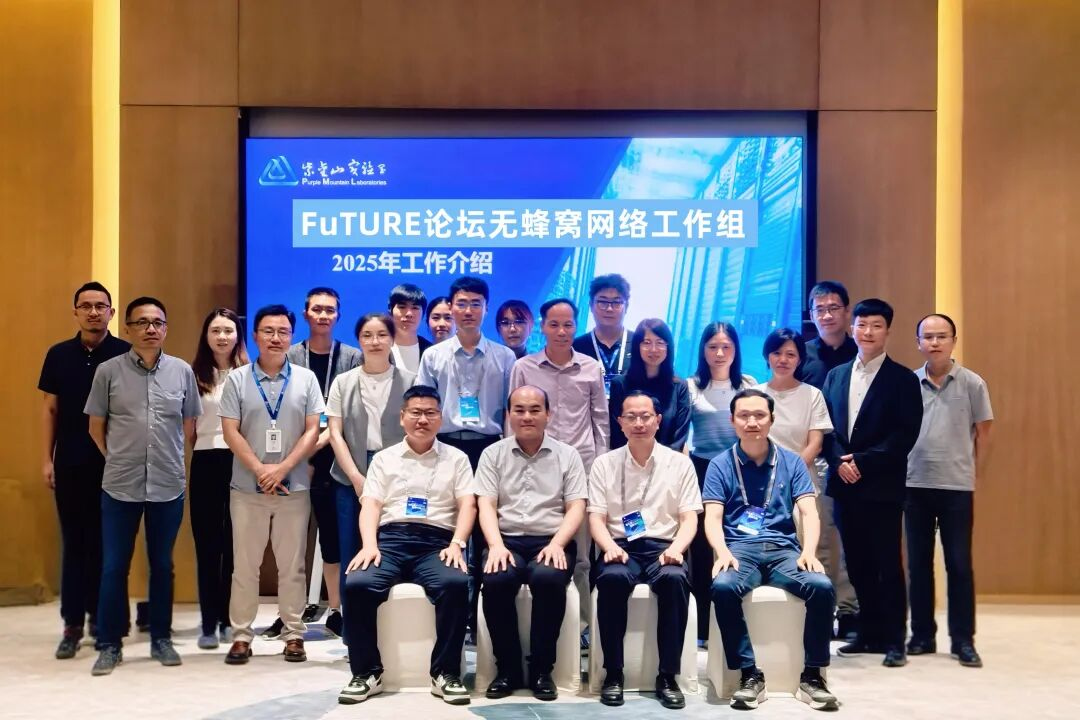
Gao Lu, an expert from Qualcomm, presented on behalf of TG1 (Business Requirements Task Group) . The group plans to conduct business requirement analysis for cellular-free networks, focusing on 6G integrated sensing and communication, digital twins, and wireless AI agents. TG1 will work closely with other task groups to accelerate the development of indicator systems for cellular-free networks in typical application scenarios such as low-altitude coverage, low-altitude sensing, and embodied intelligence.
Prof. Wang Dongming of Southeast University reported on behalf of TG2 (Technology Research Task Group) , presenting current technical breakthroughs and remaining challenges in areas including air interface phase calibration, asynchronous measurement and mitigation, uplink receiver design, and downlink transmitter design for cellular-free networks, as well as explorations in cellular-free networking architectures. Associate Professor Zeng Jie from Beijing Institute of Technology shared research findings on channel models for cellular-free network technology in URLLC scenarios, pilot frequency division schemes, and multi-metric joint optimization. There remain many issues to be resolved before cellular-free network technology can be commercially deployed, requiring coordinated efforts from all industry stakeholders.
Chen Li, an expert from CICT Mobile Communication Technology Co., Ltd., reported on behalf of TG3 (Standardization Promotion Task Group) , presenting the evolution of 5G massive MIMO technology, RAN networking architectures, and mobility management. She pointed out that 6G will shift from a network-centric to a user-centric paradigm. The 6G standardization of cellular-free networks will involve multiple aspects including Multi-TRP, mobility, and multi-carrier technologies.
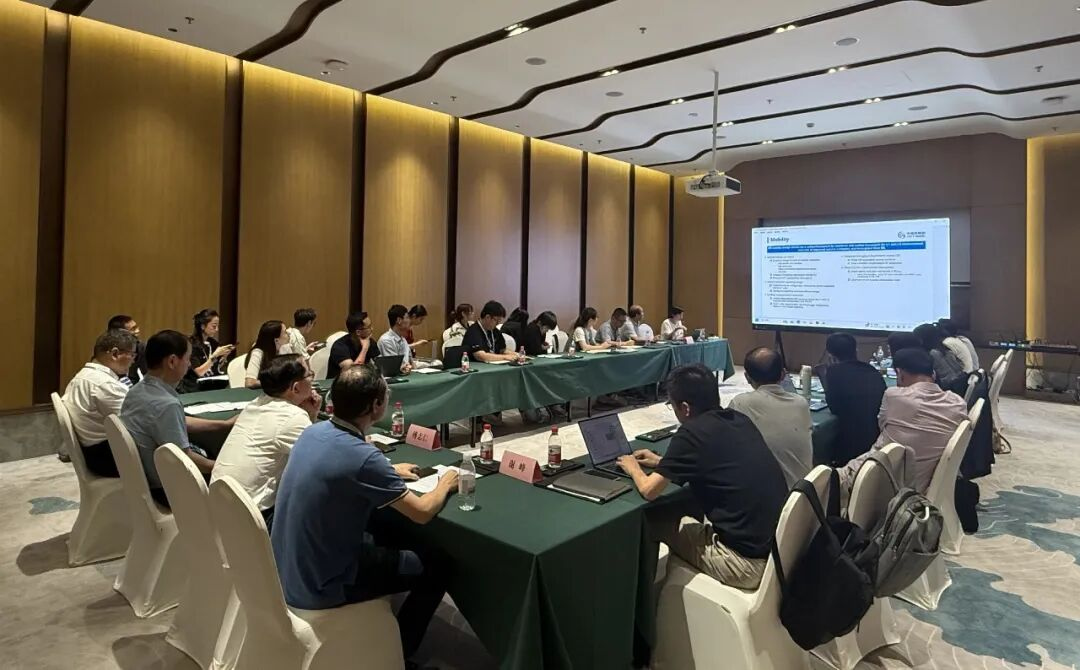
Xue Junli, an expert from China Telecom Research Institute, reported on behalf of TG4 (Test and Verification Task Group) , presenting the construction and utilization status of cellular-free network test sites, as well as application cases in low-altitude coverage, low-altitude inspection, and emergency support. Going forward, TG4 will collaborate with TG2 to steadily advance system-level verification of key technologies and explore the potential of cellular-free network technology in vertical industry applications.
Zhong Ziguo, an expert from Purple Mountain Laboratories, reported on behalf of TG5 (Data Services Task Group) , presenting progress in data collection for integrated sensing and communication scenarios. Based on the cellular-free network data collection platform jointly established with TG4, the dataset construction has been largely completed and will be further refined and released in due course.
The Working Group's chairs affirmed the achievements of all task groups and emphasized that the Working Group should focus on the commercial deployment of cellular-free network technology, making solid progress in technology development, 6G standardization, and scenario applications. All task groups need to strengthen collaboration, identify and address bottlenecks, clarify priority tasks, and coordinate efforts across academia and industry to realize the application value of cellular-free network technology.